How to Follow Up With HVAC Leads Faster Without Hiring More CSRs
Jay, InstantEstimateHQ

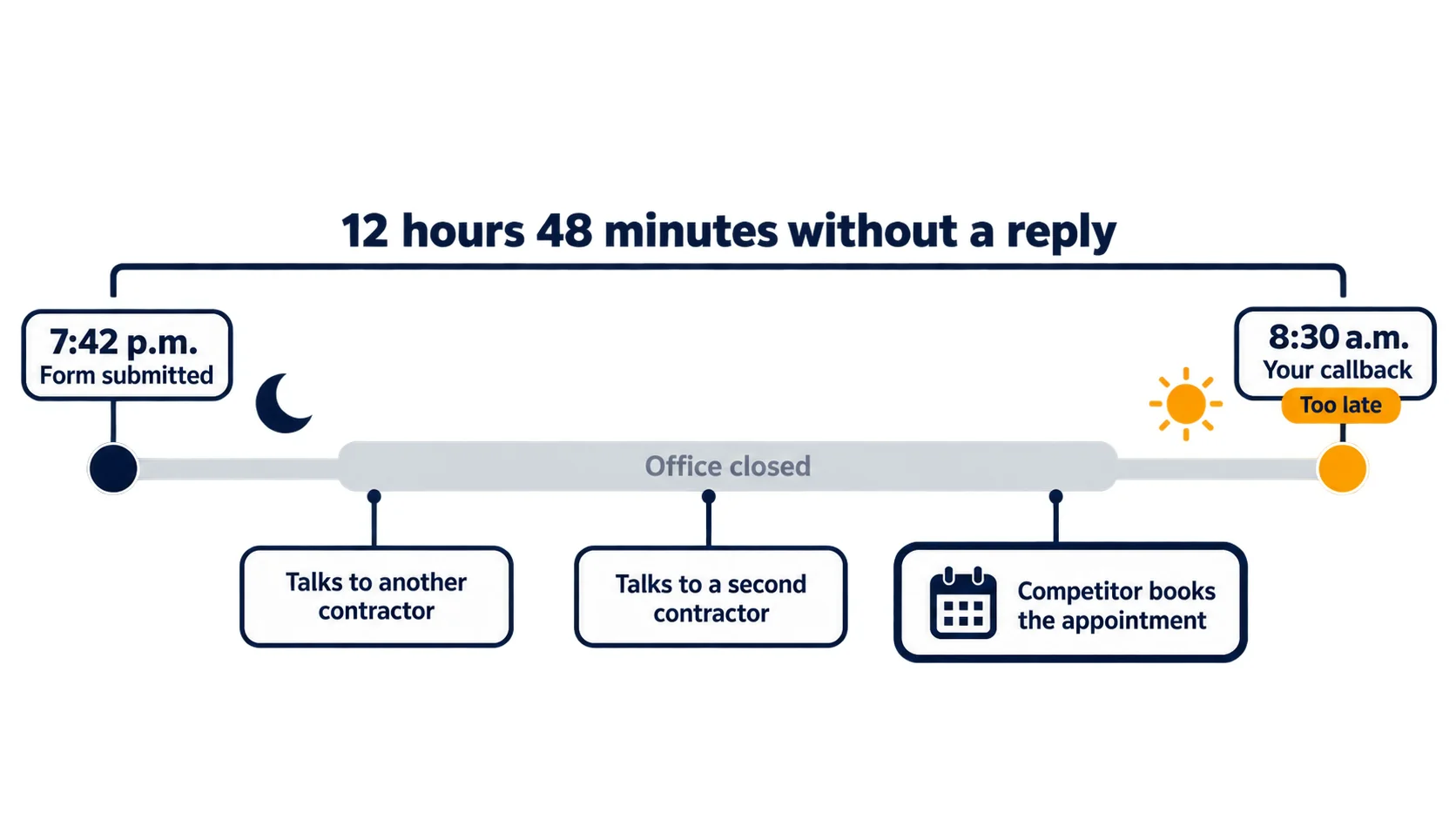
A homeowner fills out your website form at 7:42 p.m.
Their AC is 15 years old. The compressor is shot. It's 88 degrees upstairs, they've already decided they're probably replacing the system, and they're sitting on the couch with their phone looking at HVAC companies.
Your office closed at five.
Someone calls them back at 8:30 the next morning. By then, they've talked to two other contractors, and one already has an appointment on the calendar.
Nothing was wrong with the lead. You were just late.
This is a common problem in residential HVAC because leads don't arrive when the office is ready for them. They come in during the morning dispatch rush, while CSRs are already on three lines, after hours, on Saturdays, and in the middle of the first 95-degree week of summer.
Hiring another CSR can help. But if the underlying process is still "someone notices the lead, opens it, figures out what happened, types a response, calls, leaves a voicemail, and remembers to try again tomorrow," adding another person only gets you so far. A lot of that work can happen automatically now.
The useful way to think about lead follow-up isn't human versus automation. It's deciding which parts need a person and which parts shouldn't be waiting for one.
How fast should you respond to an HVAC web lead?
As soon as you reasonably can.
There isn't a magic five-minute line where a good lead becomes worthless at 5:01. Many of the speed-to-lead statistics floating around come from older, broad B2B research rather than residential HVAC. The most cited is a 2011 Harvard Business Review study, "The Short Life of Online Sales Leads", which found that most companies were far too slow to respond to online inquiries. I wouldn't turn a 15-year-old, non-HVAC study into a precise rule, but its core finding hasn't aged: waiting hours to answer an active online inquiry leaks business.
The behavior behind it makes sense. Someone submitting a replacement request online is still in shopping mode. Their phone is in their hand, your company is on their screen, and they may fill out the same form on a competitor's site five minutes later.
The major home-service platforms are now building around this. As of September 2026, both ServiceTitan and Housecall Pro offer AI-driven automatic replies to new leads, designed for leads that would otherwise sit until a CSR was free.
You don't need either platform to take the lesson: your first response shouldn't depend on somebody in the office noticing the lead.
For a web lead, aim for an automated acknowledgment within a minute or two. That doesn't mean a salesperson calls within 60 seconds. It means the homeowner immediately knows you received the request, that your company is responsive, what happens next, and ideally what they can do right now. A simple text that arrives immediately beats three hours of silence followed by a frantic callback.
One exception: the system is down right now
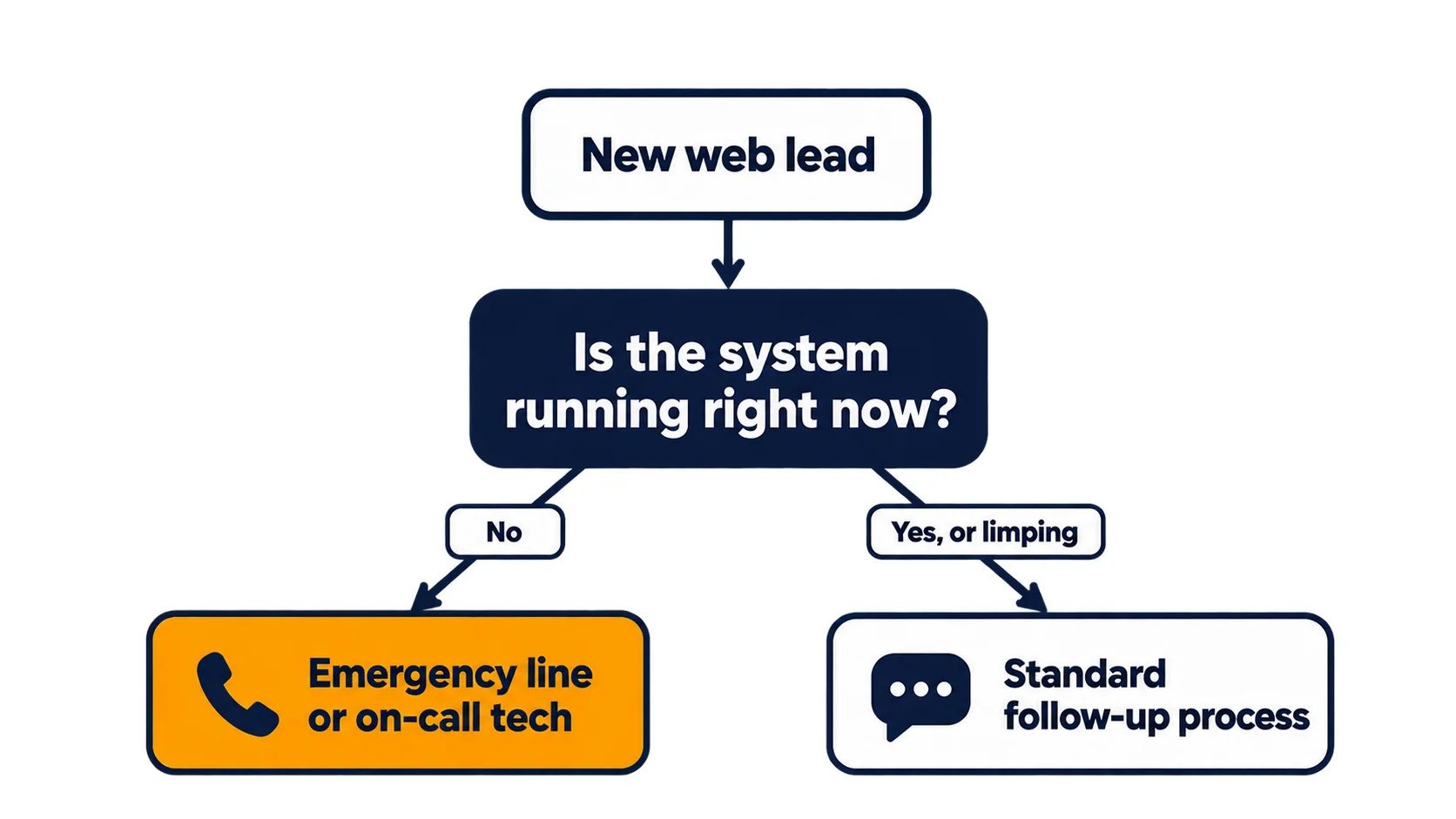
Not every web lead is a shopper. If the form says the system has failed, it's July, and there's an elderly parent or a newborn in the house, that lead doesn't belong in a follow-up sequence. It belongs with dispatch or your on-call tech.
Whatever automation you use, route urgency first. Ask whether the system is currently running, and if it isn't, send the homeowner to your emergency line or alert whoever is on call. The rest of this article is about the much larger group of homeowners who have a working (or limping) system and are deciding what to do next.
Most follow-up problems aren't staffing problems
They usually start with leads arriving in too many places.
The website form goes to an email inbox. Facebook leads go somewhere else. Google leads go into another system. A manufacturer lead gets forwarded to the sales manager. The CSR has sticky notes for people who said "call me next month," and one comfort advisor keeps his unsold estimates in his phone.
This works reasonably well in March. It falls apart in July.
The first thing I'd fix isn't headcount. It's making sure every lead lands somewhere your team can see and work it. Whatever system you use, somebody should be able to open one screen and answer:
- Who came in today?
- Who has been contacted, and who replied?
- Who booked?
- Who got an estimate but hasn't decided?
- Who needs a human call?
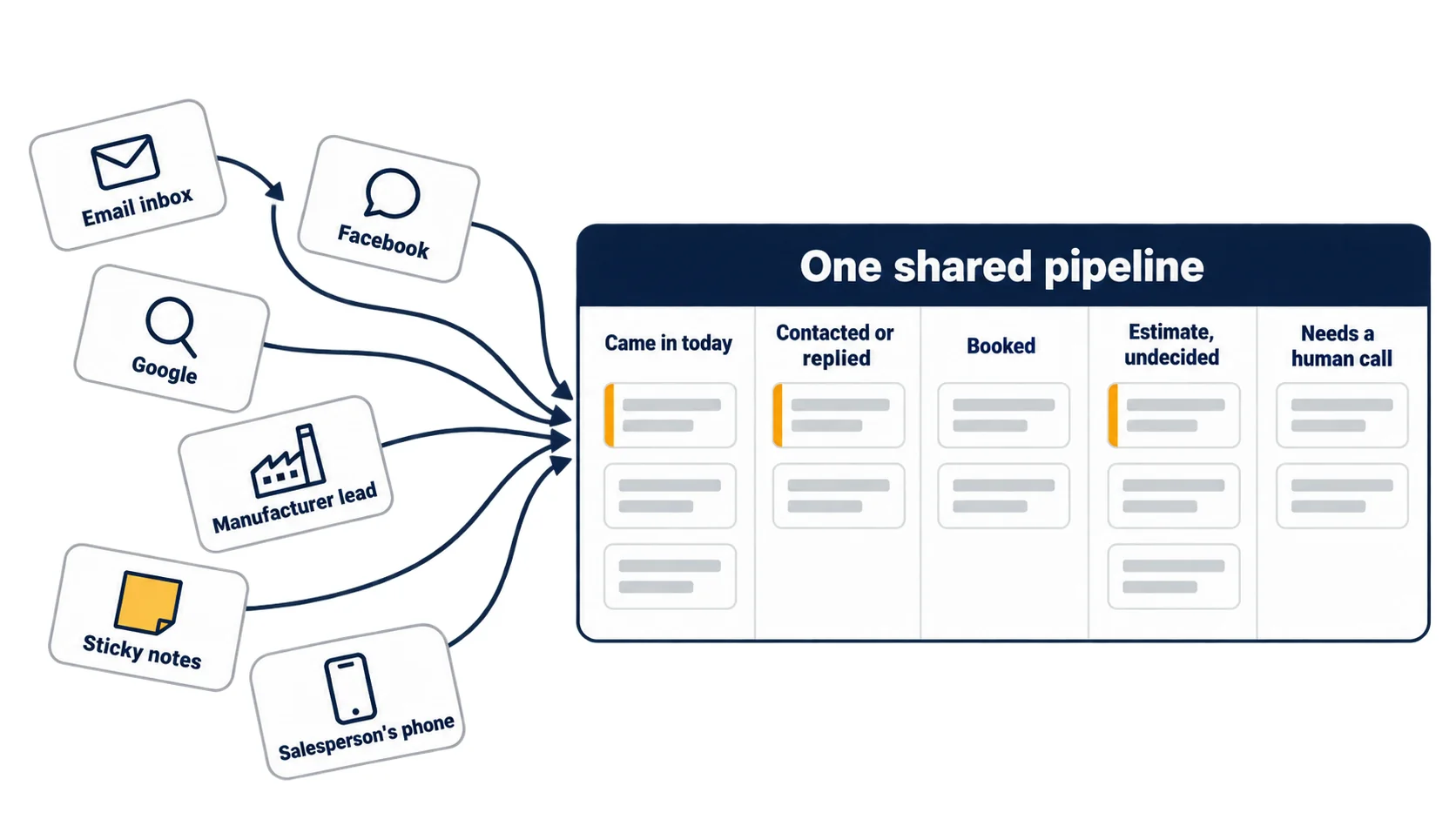
If answering those questions means checking three inboxes and asking two salespeople, leads are going to get lost.
Automate the first touch before you automate the whole conversation
This is where companies tend to overcomplicate things. You don't need an AI bot negotiating a $19,000 dual-fuel system at midnight to get value from automation. Start by sending something the moment a lead arrives.
For a basic contact or quote-request form:
Thanks for reaching out to Acme Heating & Air. We got your request and someone from our team will contact you by [time]. If you'd like to pick a time for an in-home visit now, you can do that here: [booking link]. If your system isn't running at all, call us at [number].
For a lead from an online estimator, where the homeowner has already seen options and pricing:
Thanks for requesting an estimate from Acme Heating & Air. If you have questions about the options or pricing you just saw, reply here. When you're ready for an in-home evaluation, you can choose a time here: [booking link]
Either message does work your office used to do by hand. The homeowner knows you got the request, can reply without calling, and can schedule if they're ready. If the lead came in at 10:18 p.m., nobody had to stay late.
From there, the next steps depend on what the homeowner says. A rebate question can be answered from information you've approved. "Can somebody call me tomorrow morning?" should create a task for your office. "We're ready to schedule" should get a booking link. Silence should get a later follow-up.
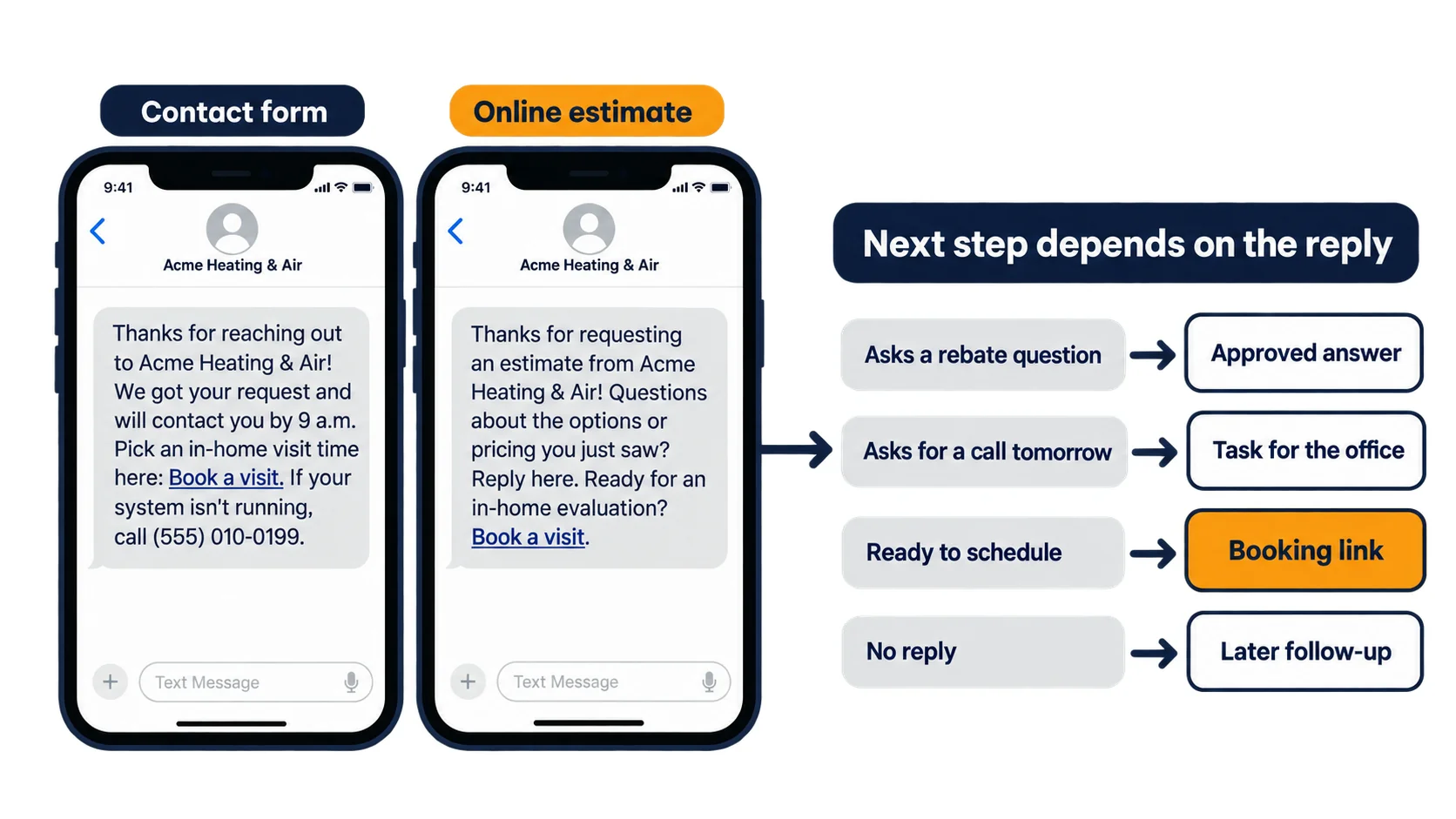
You don't need to automate every branch. You need to eliminate the dead air between "lead submitted" and "somebody eventually gets around to it."
The lead already told you things. Use them.
One of the fastest ways to make automated follow-up feel automated is to ignore what the homeowner just told you.
Someone spends five minutes on your site. They enter their address, tell you they have a 17-year-old gas furnace and central AC, review three replacement options, and linger on the mid-tier high-efficiency system. Then they get:
Hi! Thanks for contacting us. How can we help you today?
That's not a handoff. Your follow-up should pick up where the homeowner left off. If they looked at a heat pump, that should be visible. If they opened the financing details, your office shouldn't call and act surprised that financing matters.
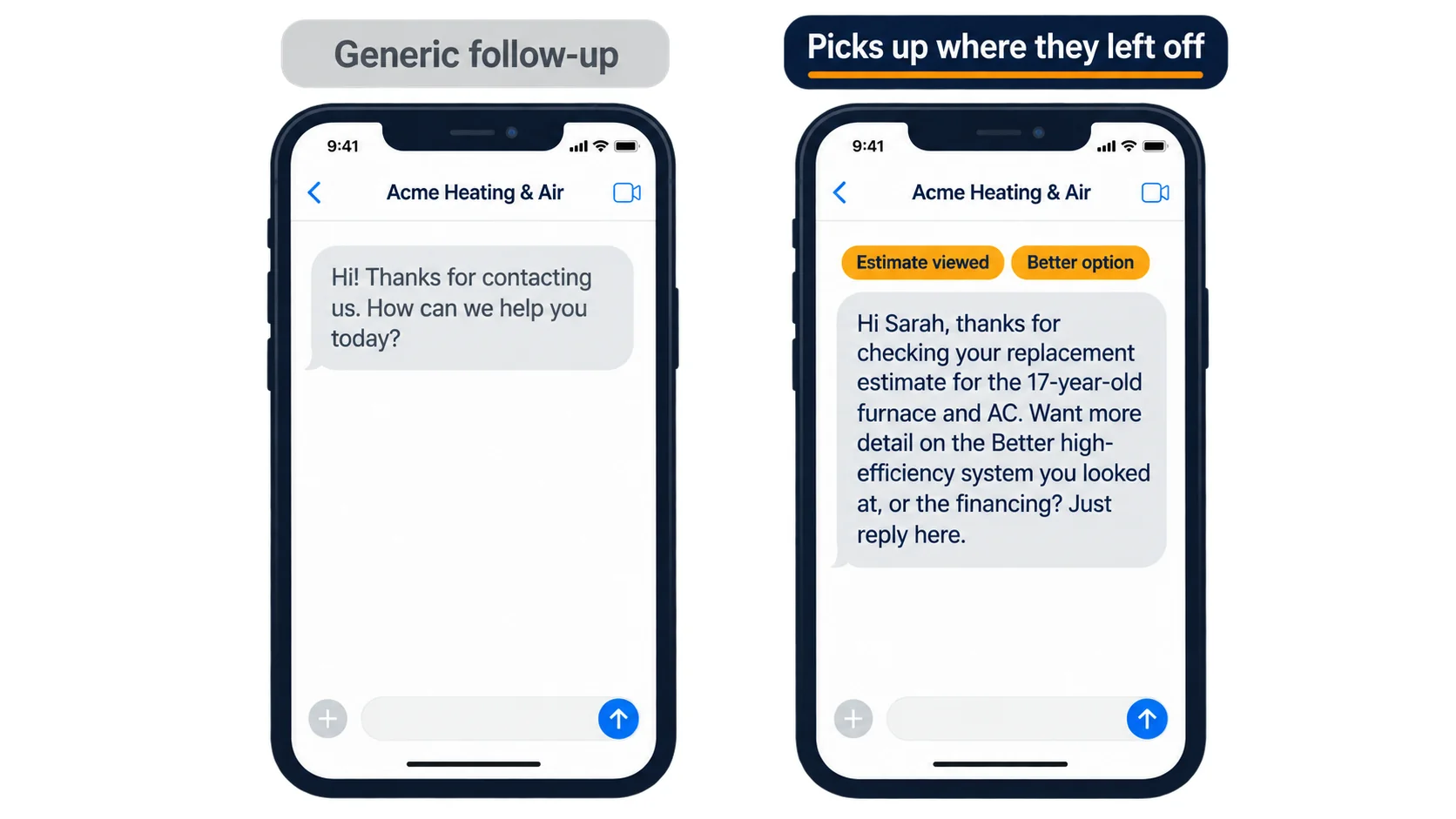
This is why getting estimate and website data into your CRM quickly matters. The specific software matters less than the principle: don't make the customer repeat their website experience once a human gets involved.
Give AI a defined job, and tell it when to hand off
Heating and cooling problems don't follow office hours. A homeowner gets home and finds the upstairs at 84 degrees. A technician condemns a system late in the afternoon, and the homeowner starts researching replacements after dinner. That's when a lot of shopping happens, and you probably don't want to staff the office around the clock to catch it.
An automated after-hours response can keep the opportunity moving. It can confirm the type of inquiry, answer common questions, ask whether the system is running, offer scheduling, and tell the homeowner when a real person will be available. That's a reasonable use of AI. Disguising an automated system as your senior comfort advisor isn't.
If it has reliable, company-approved information to work from, AI can handle questions like whether you offer financing, which areas you serve, whether installation is included, and what the difference is between the three options the homeowner received. It can also collect useful information: whether the current system still works, whether they're replacing now or planning ahead, and which option they're leaning toward.
Be more cautious about letting it improvise on final system sizing, unusual code requirements, guaranteed rebate eligibility, final installation scope, or any promise your company hasn't approved. A good AI agent knows when it has reached the edge of what it should answer, and then it hands off.
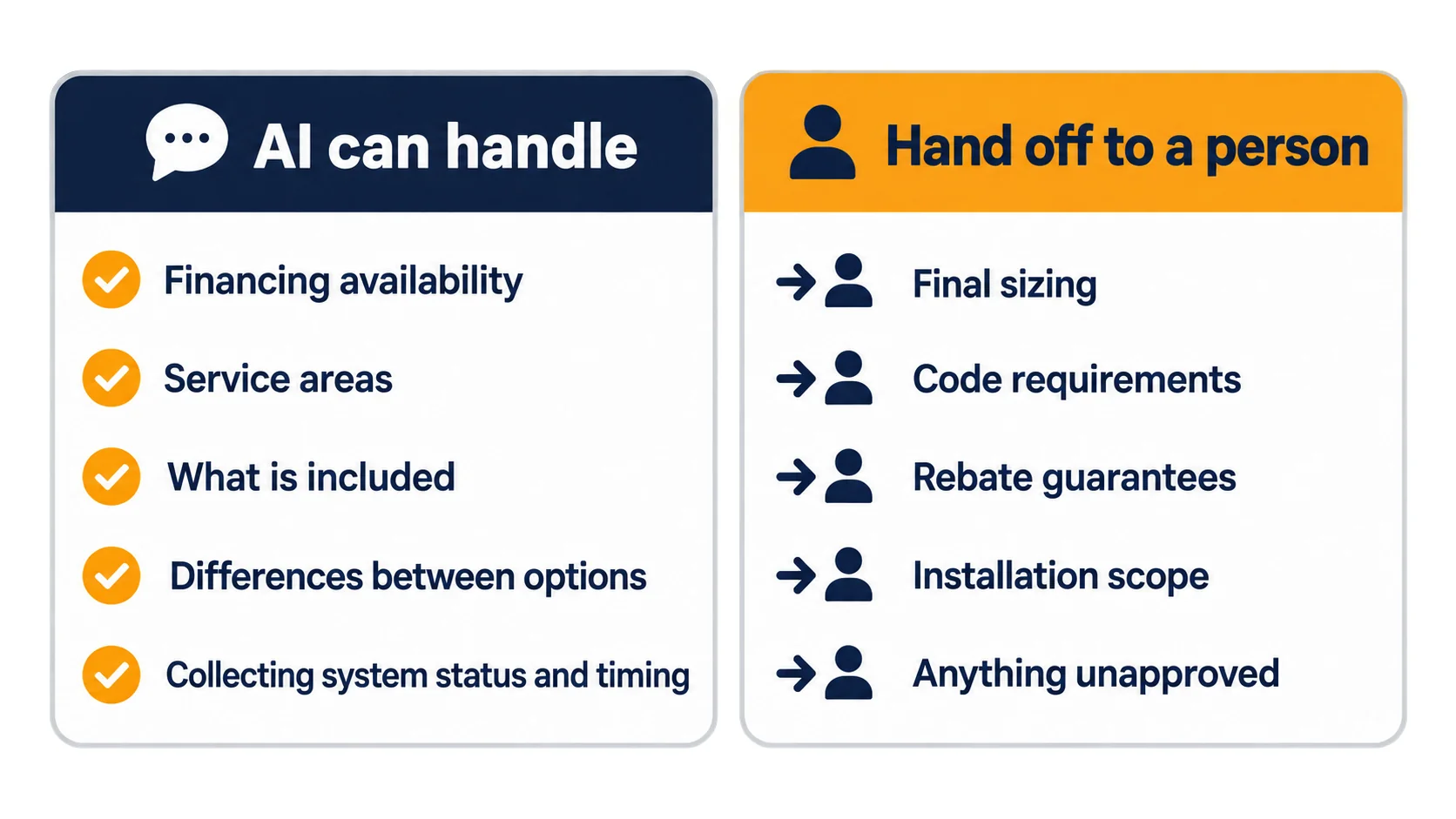
Just as important, automation should tell your people when to jump in. Suppose a homeowner gets an estimate Sunday night, replies with two questions about the high-efficiency option, and then asks:
If we go with the middle system, how soon could you install it?
That lead doesn't belong in a drip sequence until Tuesday. It's a sales opportunity, and someone should be alerted. The same goes for homeowners who ask for a call, start booking but don't finish, request financing details, or say the system has completely failed.
Good automation reduces the lead-chasing your team does while making important leads harder to miss. That's very different from sending more messages.
A booking link is useful, but don't throw it at everybody
Booking links remove a lot of back-and-forth. A homeowner who has seen a price range and wants an in-home evaluation shouldn't have to trade five messages to land on Tuesday at 3:30. Just show them the available times.
But sending a booking link isn't the same as following up. A homeowner who just received a $16,000 estimate may have a question first. They might be comparing the heat pump against the furnace-and-AC option, wondering whether financing requires a hard credit pull, waiting for their spouse to see it, or getting another bid Thursday.
If every message from your system amounts to "Ready to book? Click here!", you'll sound like a robot even if a human wrote the copy. Help the homeowner with the decision they're currently trying to make, then make scheduling easy when they're ready.
Unsold estimates need relevance, not speed
A new web lead and a homeowner who sat with your comfort advisor for 90 minutes yesterday are not the same thing. Don't put them in the same sequence. The new lead needs speed. The unsold estimate needs relevance.
After an in-home presentation, the homeowner doesn't need another generic message about how great your company is. They need help with whatever is holding them back, whether that's price, financing, a competing proposal, choosing between equipment options, a spouse, rebates, installation concerns, repair-versus-replace uncertainty, or plain procrastination.
Your follow-up should sound like you remember the conversation:
Hi Mark, just checking in on the two replacement options Chris went over with you yesterday. If you have questions about the variable-speed system or the financing, reply here and we'll get them answered.
That's much better than:
We haven't heard from you! Are you still interested in HVAC services?
The first sounds like your company knows who Mark is. The second sounds like Mark fell into a marketing campaign.
And don't give up after two days. Some homeowners sign at the kitchen table. Others get a third bid because they promised themselves they would, spend a week reading about variable-speed compressors, or disappear and call back six weeks later when the old system finally dies. "Didn't book immediately" isn't the same as "gone forever."
Near-term follow-up should slow down eventually, but the opportunity should stay in the system. If they plan to replace in the fall, follow up in the fall. If they're waiting on a rebate program, note it. If they repaired the system for now, keep the replacement opportunity. The best time to build that future pipeline is while you still remember who these people are.
How often should you follow up?
There's no universal cadence. A failed system in August needs a different pace than a homeowner pricing a future replacement in April. Build around the situation rather than a magic number of texts.
For a fresh replacement web lead, a practical starting point:
| Timing | Follow-up |
|---|---|
| Immediately | Automated text/email confirming the request, with a clear next step |
| Same day (or next morning if after hours) | Personal call or message for high-intent leads |
| Next day | Short follow-up if they haven't responded |
| 2–3 days later | Ask whether they have questions about pricing, options, or scheduling |
| About a week later | Final near-term follow-up before moving them into longer-term nurture |
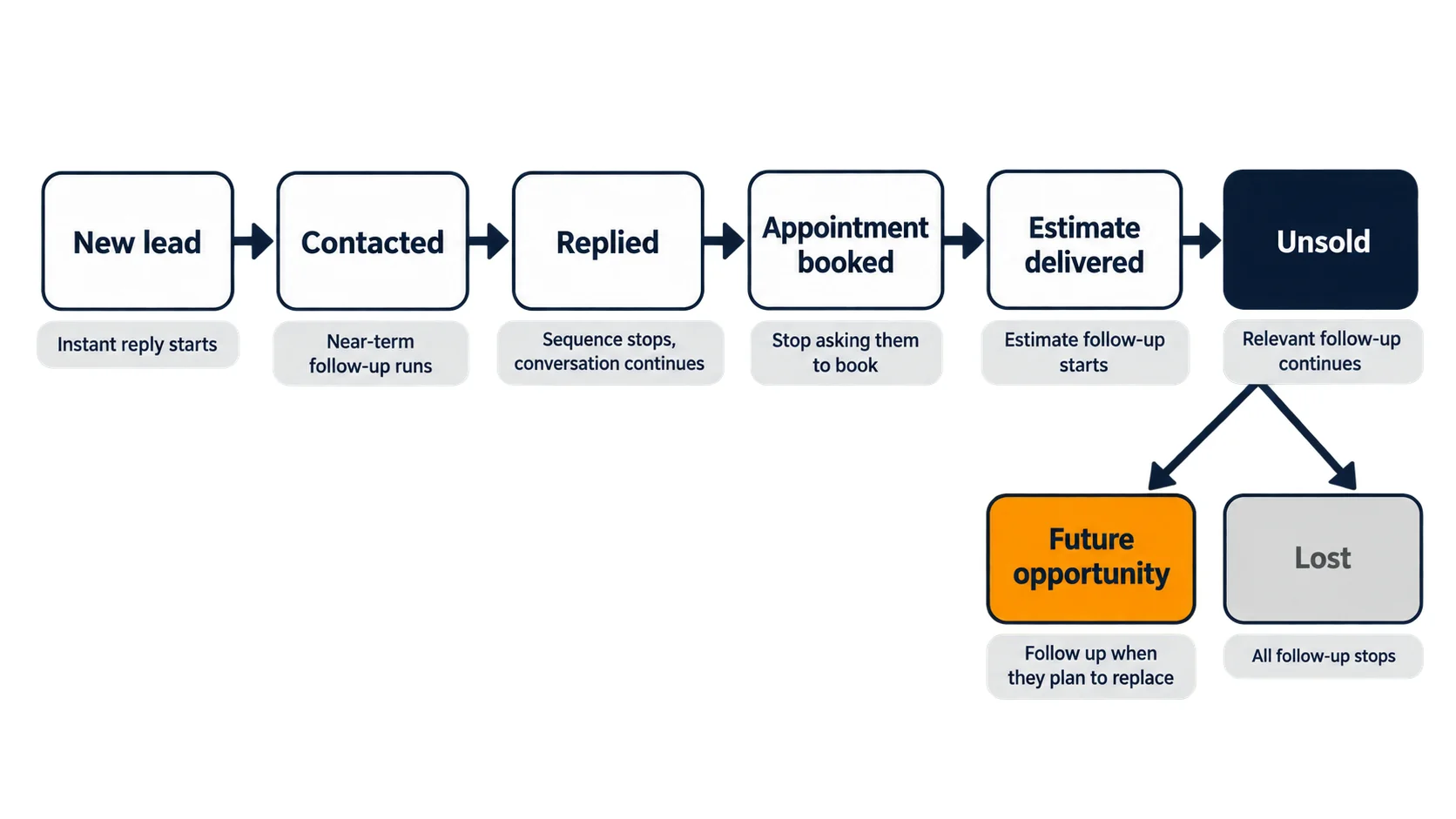
The rules that matter more than the timing: if someone responds, stop the sequence and continue the actual conversation. If they book, stop asking them to book. If they say they're replacing in October, don't text them every two days through June.
That requires statuses: new lead, contacted, replied, appointment booked, estimate delivered, unsold, future opportunity, lost. Without some version of those, you're not automating follow-up. You're automating messages.
Text and email should do different jobs
Text is hard to beat for the first response. It's fast, easy to reply to, and doesn't require checking an inbox. Email gives you room for equipment information, estimate details, financing and rebate resources, and links the homeowner may want to revisit.
Use both. A new replacement lead might get an immediate text saying the estimate is ready and a more detailed email with the options. If they ask a detailed question, answer it in whichever channel the conversation is already happening. Avoid sending the same message through both channels.
A note on texting rules. Business texting in the U.S. comes with real requirements. Most carriers require A2P 10DLC registration before you send automated texts from a local number, and consent, identification, and opt-out rules apply. Some states also restrict when certain messages can be sent, which matters if you plan to reply to leads late at night. Confirm your setup with your texting provider, and with an attorney if you're unsure, before turning on automation.
What this frees up for your CSRs
A CSR is valuable when the homeowner needs a person: when the situation is confusing, when someone is upset, when the call requires judgment, or when a high-intent homeowner needs help finding the right appointment.
Typing "Thanks for contacting us, someone will be in touch soon" for the 14th time that day isn't where that value is. Neither is copying a web lead out of an email into the CRM, setting reminders to text an estimate in three days, or manually sending a booking link to someone who already said they're ready.
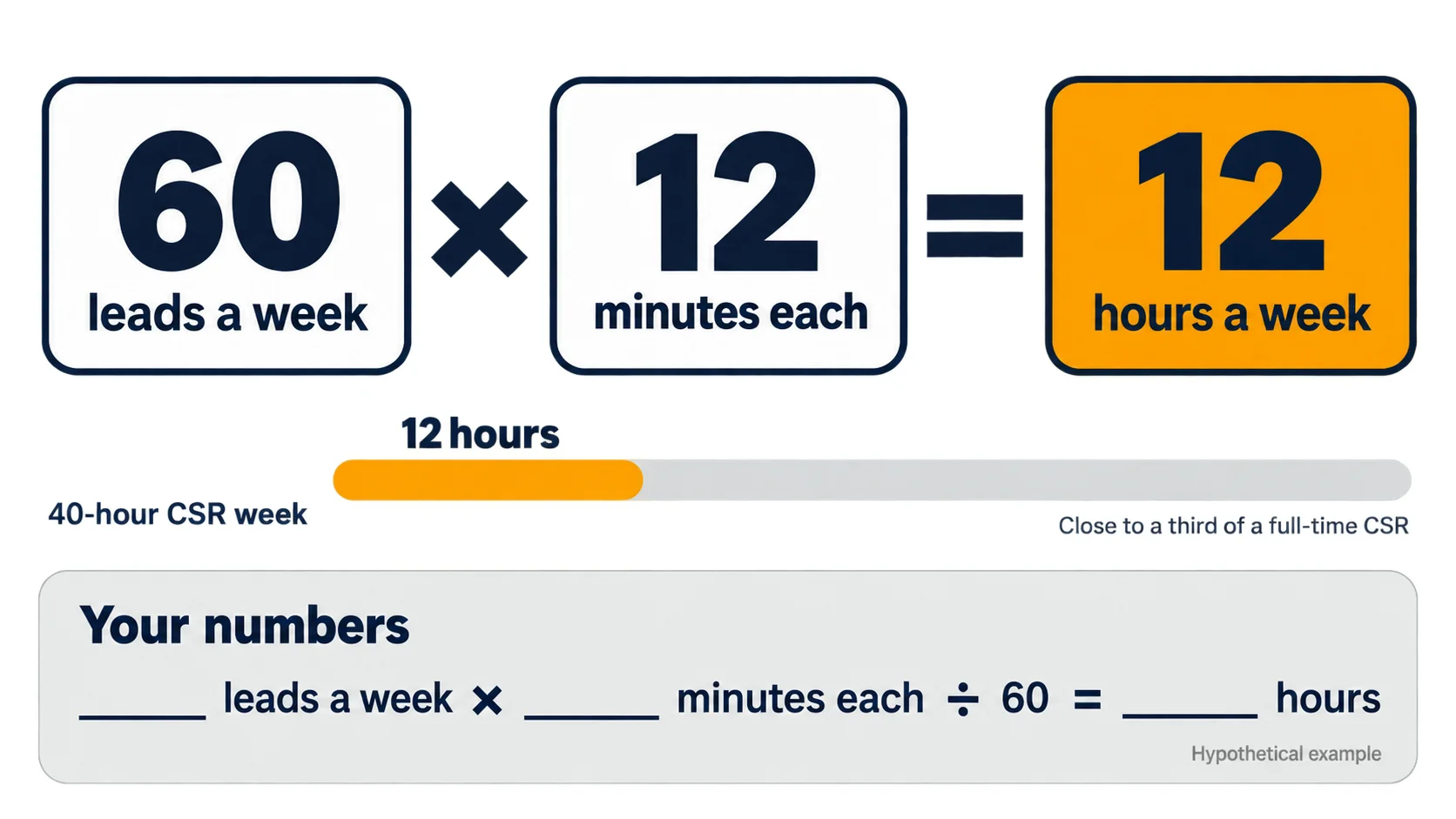
It's worth doing the math for your own shop. Count your weekly web and estimate leads, then estimate the minutes your team spends per lead on acknowledgment, data entry, reminders, and routine follow-up texts. As a hypothetical, 60 leads a week at 12 minutes of routine handling each is 12 hours, close to a third of a full-time CSR, spent on work that software can do immediately and consistently. Your numbers will differ, but that's the capacity you get back without adding a desk.
What to measure
You'll know the changes are working if these numbers move:
- Time to first response, overall and for after-hours leads
- Contact rate, meaning the share of leads that reply or talk to someone
- Booking rate by lead source
- Close rate on unsold estimates after 30 and 90 days
Pull a baseline before you change anything so you can compare after a month or two.
Where Instant Estimate HQ fits
Instant Estimate HQ starts the follow-up process after a homeowner receives their online HVAC estimate. By then, the homeowner has entered their property information, reviewed replacement options, and seen a preliminary price range, so the follow-up never has to open with "How can we help?"
It automatically contacts estimate leads by text and email, answers common questions, and continues the conversation after the homeowner leaves your website. When they're ready to schedule, it sends a booking link. When the conversation reaches a point where someone from your office should take over, it alerts your team. The lead stays attached to the property details and equipment options the homeowner reviewed.
Instead of a lead that says Name: Sarah / Phone: 555-1234 / Message: Need HVAC quote, your office sees what Sarah was actually looking at. Automation handles the immediate response and routine back-and-forth, and your people step in when the conversation deserves them.
Try the live demo to see the estimate a homeowner gets, or book a call to see how the follow-up works.
Frequently asked questions
How fast should I respond to an HVAC web lead?
As close to immediately as practical. With automation, an acknowledgment can go out within seconds. A salesperson doesn't need to call instantly, but the homeowner shouldn't wait hours to learn whether you received the request.
How do I stop HVAC leads from going cold?
Remove the delay between submission and first contact. Send an automatic text or email when the lead arrives, put every lead into one shared pipeline, and alert your team when the homeowner replies or shows high intent.
How do I automate follow-up on HVAC estimates?
Trigger it from the estimate status. Once an estimate is delivered and unsold, send a short message that references the actual proposal, follow up again later, and create a task for human outreach when appropriate. Stop automating when the job sells, the homeowner declines, or a real conversation starts.
How can I respond to HVAC leads at night without hiring a CSR?
Use an automated first-response system that acknowledges the inquiry, answers basic questions, offers scheduling, and routes urgent no-heat or no-cool situations to your on-call line. Tell the homeowner when a person will follow up.
Can AI answer homeowner questions after an HVAC estimate?
Yes, for routine questions, if it works from company-approved information. Financing availability, scheduling, service areas, and basic differences between options are good fits. Final sizing, unusual job conditions, and commitments it can't verify should go to a person.
Should HVAC follow-up use text or email?
Both. Text works best for the fast first response and quick back-and-forth. Email is better for equipment details, estimate copies, financing, and rebate information.
The bottom line
You don't need 47 workflows. Start with five things:
- Every web lead lands in one place.
- Every new lead gets an immediate response, and urgent ones go straight to a person.
- High-intent leads trigger a human follow-up.
- Homeowners who are ready can book without phone tag.
- Leads who don't book stay in follow-up until they buy, say no, or become a clear future opportunity.
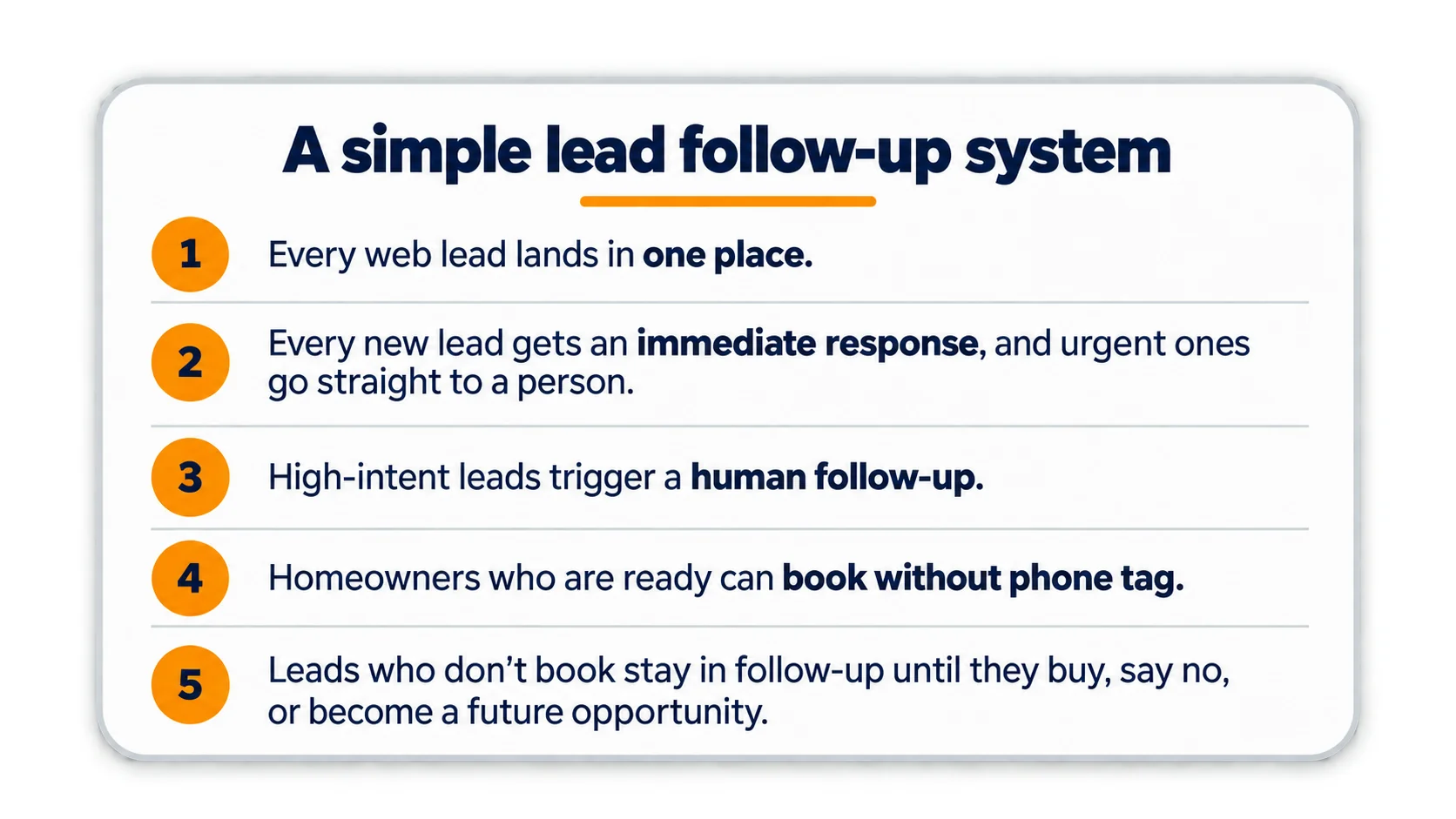
Get those right before worrying about sophisticated lead scoring. The worst system is the one most contractors have used at some point: a website notification comes in, everybody assumes somebody else called it, and nobody did.
Your CSR shouldn't have to be the system. They should be the person who takes over when the system has done everything it can.